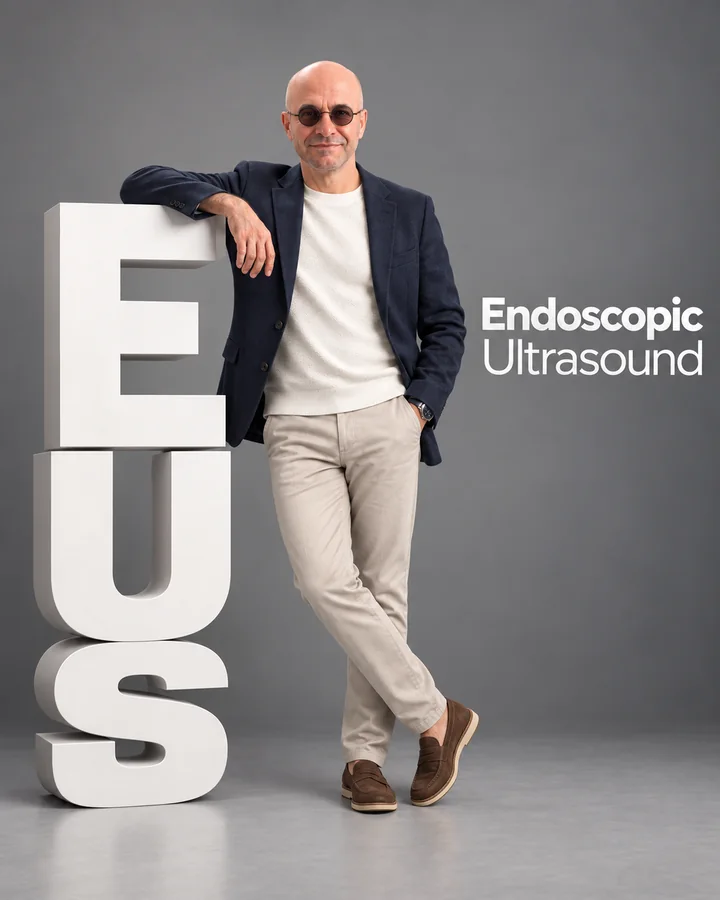
EUS

What Is EUS?

Combines endoscopy and ultrasound to examine the pancreas, bile ducts, digestive wall and nearby structures in detail.

Endoscopic Ultrasound (EUS) hasta rehberiDoç. Dr. Süleyman Günay
01Typical durationDuration varies with the indication and treatment
02Comfort planSedation or anaesthesia is individually planned
03Observation / stayDay case or inpatient observation when clinically needed
04ResultsInitial findings the same day; pathology later
PHYSICIAN · EVIDENCE · EXPERIENCE

EUS and Assoc. Prof. Süleyman Günay

This page connects scientific guidance, relevant conditions and diagnostics, verifiable congress/live-case records involving Süleyman Günay, and the patient decision pathway. The records do not claim superiority or guarantee an outcome.

Open physician profile →Source-linked academic archive →
9scientific sources linked to this page12related verifiable academic records6connected patient-pathway guides
International faculty · Session chairManchester Advanced Endoscopy Symposium 20262026-07-16 · Open primary source ↗
EVIDENCE DEPTH · GUIDELINES · PEER-REVIEWED RESEARCH

EUS evidence review: from high-resolution imaging to tissue diagnosis and therapeutic EUS

Defining EUS simply as “ultrasound performed through an endoscope” leaves out the part that matters most clinically: the question the test is meant to answer. EUS can combine close-range imaging, targeted tissue acquisition and, in selected situations, therapeutic access. The sections below explain how current guidance frames those choices and where the limits of the evidence matter.

Knowledge sharing knows no borders.

Doç. Dr. Süleyman GünayFrom his statement on scientific collaboration and advanced-endoscopy education during the MENA EUS programme.Translation note: the original statement is in Turkish.
Direct quotation sourceMENA EUS CLUB 7th Endoscopy Course · birincil basın dokümanı · 2025

1. When does EUS add clinically useful information?

EUS can assess the pancreas, biliary tree, gastrointestinal wall and adjacent lymph nodes at close range. The indication should nevertheless be defined before the procedure: detection of a small duct stone, characterisation of a solid pancreatic lesion or cyst, assessment of wall layers, staging, tissue acquisition or therapeutic access are different clinical questions. If CT, MRI/MRCP or another lower-burden test can answer the same question adequately, the incremental value of EUS should be weighed against the invasiveness of the procedure.

For solid pancreatic masses, the 2024 ASGE guideline addresses EUS-guided tissue acquisition in detail when pathological confirmation is required. This does not mean that every mass automatically requires a needle biopsy. The key issue is whether tissue will change surgical, oncological or surveillance management. A negative or indeterminate sample also has to be interpreted in context, particularly when chronic pancreatitis, a small target, necrosis or previous non-diagnostic sampling reduces diagnostic certainty.

2. FNA/FNB is part of a diagnostic chain, not merely a needle choice

When tissue is required, the objective is an adequate specimen that can answer a defined clinical question rather than simply completing a biopsy. The 2024 ASGE pancreatic-mass guideline supports FNB over FNA in many solid pancreatic-mass scenarios and treats needle and sampling technique as quality issues. Technique cannot be separated from pathology: viable target selection, specimen adequacy, radiology-pathology concordance and a plan for repeat sampling when necessary are all part of the same pathway.

Pancreatic cysts require a different framework. Morphology, duct communication, mural nodules, interval growth and other risk features are first assessed on imaging. Fluid or tissue sampling is most useful when the result is likely to change management. A high-quality EUS report therefore does more than state that a cyst is present: it documents the features that drive risk assessment, why sampling was or was not performed, and how the result will be integrated with cross-sectional imaging and clinical risk.

Evidence for this subsection ASGE2024ESGE2026ESGE2017

3. Therapeutic EUS requires a system of expertise, documentation and rescue planning

Therapeutic EUS turns ultrasound guidance into access for drainage or other intervention. Examples include biliary drainage after unsuccessful conventional access and step-up endoscopic management of selected pancreatic collections. The 2024 ASGE therapeutic-EUS guideline recognises EUS-guided biliary drainage as an important option after failed ERCP in appropriately selected patients. It is not a universal replacement for ERCP or percutaneous drainage; anatomy, level of obstruction, infection, surgical plans and local expertise remain decisive.

Quality in EUS is broader than technical success. The ESGE 2025 update identifies informed consent, landmark documentation, structured training, standardised pancreatic-cyst description, tissue-acquisition performance and adverse-event monitoring among key quality measures. For patients, that means “advanced technology” should never be the sole marker of quality. Indication, documentation, pathology integration, complication management and multidisciplinary decision-making matter just as much.

This evidence review is for general information. Guideline recommendations cannot be converted into an individual treatment recommendation without considering anatomy, comorbidities, previous therapy and current clinical findings.

From the patient perspective

What should you expect from this procedure?

1AssessmentRight indication
2PreparationFasting · medicines · support
3ProcedureSedation + treatment
4RecoveryObservation · debrief
5Follow-upResults · pathology · review
Quick view

What should be clear before, during and after the procedure?

WhenWhat to clarifyWhy it matters
BeforeFasting, medicines, blood thinners, escort and the purpose of the procedureAffects safety and planning
Procedure daySedation/anaesthesia, possible additional intervention and observation timeClarifies expectations and consent
AfterDiet, medicines, driving, results/pathology and warning signsSupports safe recovery and follow-up
Quick answer

Combines endoscopy and ultrasound to examine the pancreas, bile ducts, digestive wall and nearby structures in detail. Suitability and preparation must be personalised after clinical review.

Expert summary

EUS combines endoscopy with high-resolution ultrasound to examine the pancreas, bile ducts, gastrointestinal wall and nearby lymph nodes. It can add targeted FNA/FNB tissue acquisition or selected drainage in the same session. Findings are interpreted with CT/MRI/MRCP, laboratory results and pathology rather than in isolation.

01

What is it?

Combines endoscopy and ultrasound to examine the pancreas, bile ducts, digestive wall and nearby structures in detail.

It is planned as an individual clinical pathway based on symptoms, previous tests, anatomy and treatment goals. Suitability cannot be decided from a web page alone. Expected benefits, alternatives, sedation or anaesthesia and follow-up are discussed before consent. The goal is safe recovery and an appropriate long-term plan as well as technical success.

R
SECTION-LEVEL EVIDENCE

Evidence map for this guide

The organisations and guidelines used for each section are mapped below.

Overview3 sources
Decision7 sources
ASGE · 2024American Society for Gastrointestinal Endoscopy guideline on the role of endoscopy in the diagnosis and management of solid pancreatic masses: summary and recommendationsESGE · 2026Performance measures for endoscopic ultrasound: an ESGE Quality Improvement Initiative – Update 2025ASGE · 2024American Society for Gastrointestinal Endoscopy guideline on the role of therapeutic EUS in the management of biliary tract disorders: summary and recommendationsESGE · 2017Indications, results, and clinical impact of EUS-guided sampling in gastroenterology: ESGE Clinical GuidelineASGE · CurrentEUS and EUS-guided procedures – guideline resourcesMedicine (Baltimore) · 2021Evaluation of hydrogen peroxide-assisted endoscopic ultrasonography-guided necrosectomy in walled-off pancreatic necrosis: A single-center experienceTürk Gastroenteroloji Derneği (TGD) · CurrentTürk Gastroenteroloji Derneği – Hasta ve Mesleki Bilgi Kaynakları
Indications7 sources
ASGE · 2024American Society for Gastrointestinal Endoscopy guideline on the role of endoscopy in the diagnosis and management of solid pancreatic masses: summary and recommendationsASGE · 2024American Society for Gastrointestinal Endoscopy guideline on the role of therapeutic EUS in the management of biliary tract disorders: summary and recommendationsESGE · 2017Indications, results, and clinical impact of EUS-guided sampling in gastroenterology: ESGE Clinical GuidelineAGA GI Patient Center · CurrentEndoscopic Ultrasound (EUS)ASGE · CurrentEUS and EUS-guided procedures – guideline resourcesMedicine (Baltimore) · 2021Evaluation of hydrogen peroxide-assisted endoscopic ultrasonography-guided necrosectomy in walled-off pancreatic necrosis: A single-center experienceTürk Gastroenteroloji Derneği (TGD) · CurrentTürk Gastroenteroloji Derneği – Hasta ve Mesleki Bilgi Kaynakları
Preparation3 sources
Procedure8 sources
ASGE · 2024American Society for Gastrointestinal Endoscopy guideline on the role of endoscopy in the diagnosis and management of solid pancreatic masses: summary and recommendationsESGE · 2026Performance measures for endoscopic ultrasound: an ESGE Quality Improvement Initiative – Update 2025ASGE · 2024American Society for Gastrointestinal Endoscopy guideline on the role of therapeutic EUS in the management of biliary tract disorders: summary and recommendationsESGE · 2017Indications, results, and clinical impact of EUS-guided sampling in gastroenterology: ESGE Clinical GuidelineAGA GI Patient Center · CurrentEndoscopic Ultrasound (EUS)ASGE · CurrentEUS and EUS-guided procedures – guideline resourcesMedicine (Baltimore) · 2021Evaluation of hydrogen peroxide-assisted endoscopic ultrasonography-guided necrosectomy in walled-off pancreatic necrosis: A single-center experienceTürk Gastroenteroloji Derneği (TGD) · CurrentTürk Gastroenteroloji Derneği – Hasta ve Mesleki Bilgi Kaynakları
Aftercare4 sources
Alternatives3 sources
Risks8 sources
ASGE · 2024American Society for Gastrointestinal Endoscopy guideline on the role of endoscopy in the diagnosis and management of solid pancreatic masses: summary and recommendationsESGE · 2026Performance measures for endoscopic ultrasound: an ESGE Quality Improvement Initiative – Update 2025ASGE · 2024American Society for Gastrointestinal Endoscopy guideline on the role of therapeutic EUS in the management of biliary tract disorders: summary and recommendationsESGE · 2017Indications, results, and clinical impact of EUS-guided sampling in gastroenterology: ESGE Clinical GuidelineAGA GI Patient Center · CurrentEndoscopic Ultrasound (EUS)ASGE · CurrentEUS and EUS-guided procedures – guideline resourcesMedicine (Baltimore) · 2021Evaluation of hydrogen peroxide-assisted endoscopic ultrasonography-guided necrosectomy in walled-off pancreatic necrosis: A single-center experienceTürk Gastroenteroloji Derneği (TGD) · CurrentTürk Gastroenteroloji Derneği – Hasta ve Mesleki Bilgi Kaynakları
Follow-up6 sources
ASGE · 2024American Society for Gastrointestinal Endoscopy guideline on the role of endoscopy in the diagnosis and management of solid pancreatic masses: summary and recommendationsESGE · 2026Performance measures for endoscopic ultrasound: an ESGE Quality Improvement Initiative – Update 2025ASGE · 2024American Society for Gastrointestinal Endoscopy guideline on the role of therapeutic EUS in the management of biliary tract disorders: summary and recommendationsESGE · 2017Indications, results, and clinical impact of EUS-guided sampling in gastroenterology: ESGE Clinical GuidelineMedicine (Baltimore) · 2021Evaluation of hydrogen peroxide-assisted endoscopic ultrasonography-guided necrosectomy in walled-off pancreatic necrosis: A single-center experienceTürk Gastroenteroloji Derneği (TGD) · CurrentTürk Gastroenteroloji Derneği – Hasta ve Mesleki Bilgi Kaynakları
Urgent warnings1 sources
FAQ1 sources
02

How is this procedure selected?

The purpose of EUS is defined before the procedure: detecting small stones, characterising a pancreatic cyst or mass, defining a wall layer, staging disease, acquiring tissue or obtaining therapeutic access. Sampling is avoided when it will not change management, and lower-burden CT/MRI/MRCP is considered when it can answer the same question. Target location, adjacent vessels, bleeding and infection risk guide the plan.

Key principle

The clinical question—not the procedure name—drives the plan. If a simpler and safer method can answer the same question, it should be discussed first.

03

When is it considered?

This procedure may be considered in the situations below. The list is not a diagnosis or a treatment decision; test findings and individual risks must be interpreted together.

  • Symptoms or test findings related to this procedure
  • Need for detailed diagnosis, tissue sampling or endoscopic treatment
  • A specialist review showing that expected benefit outweighs individual risk
04

Preparation timeline

This is a general pathway. Your personalised written hospital instructions and medicine plan always take priority.

Before booking

Share your complete health history

Tell the team about blood thinners, diabetes medicines, allergies, pregnancy, heart or lung disease and previous anaesthesia problems. Never stop prescribed medicine without an individual plan.

Before the procedure

Follow your written preparation plan

Fasting, bowel preparation and medicine timing depend on the procedure and your health. The instructions from your treating unit take priority over general web information.

On the day

Bring records and arrange support

Bring imaging, reports and an up-to-date medicine list. If sedation is planned, arrange a responsible adult to take you home and do not drive.

Before discharge

Confirm the recovery plan

Ask about diet, medicines, expected symptoms, pathology results, follow-up and the warning signs that require urgent contact.

05

What happens during the procedure?

The exact steps depend on the indication and findings. Monitoring, comfort and safety continue throughout the procedure; any possible therapeutic step is discussed during consent.

1Identity and safety checks2Sedation or anaesthesia plan3Endoscopic procedure4Recovery and debrief
06

Aftercare and recovery

Recovery, diet, medicines and discharge are individualised. If tissue is obtained, arrange how and when the pathology result will be reviewed with the clinical team.

Ask before you leave

When can I eat? When do I restart medicines? Can I drive? Who will explain pathology results and when? When is follow-up?

07

Alternatives and comparison options

The same technique is not appropriate for every patient. These options may be compared according to the clinical question, anatomy, disease extent and general health.

  • Ultrasound, CT, MRI or MRCP according to the clinical question
  • Structured imaging surveillance when tissue is not required
  • Radiology-guided or surgical sampling depending on target location
  • ERCP when a bile or pancreatic duct problem requires treatment
08

Risks and safety

Every medical intervention carries risk. Probability varies with the scope of treatment, technique and your individual health.

  • Bleeding, infection or a reaction to sedation
  • A tear or perforation, with risk varying by the intervention
  • Procedure-specific complications discussed during consent
  • Need for observation, repeat endoscopy, radiology or surgery in uncommon cases
09

Results and long-term follow-up

Follow-up after imaging EUS depends on the finding. After needle sampling, cytology or histology and any molecular results are interpreted with the imaging and clinical context; inadequate samples may require repeat EUS, another sampling route or multidisciplinary review.

Questions you may want to ask your doctor

  • What exact clinical question is this procedure expected to answer?
  • Is the aim diagnosis, treatment, tissue sampling or more than one of these?
  • What are the reasonable alternatives in my case?
  • How should I manage blood thinners, diabetes medicines and fasting?
  • What findings could change the plan during the procedure?
  • When and how will I receive pathology or final results?
!

When should I seek urgent help?

If any of the following occurs, do not wait for a routine web response; seek urgent medical care where you are.

  • Severe or worsening chest or abdominal pain
  • Fever, chills or marked weakness
  • Vomiting blood, black stool or heavy rectal bleeding
  • Breathing difficulty, fainting or confusion
  • Persistent vomiting, inability to drink or increasing abdominal swelling

Press and interviews about this topic

These press items are directly linked to the condition, symptom or procedure on this page.
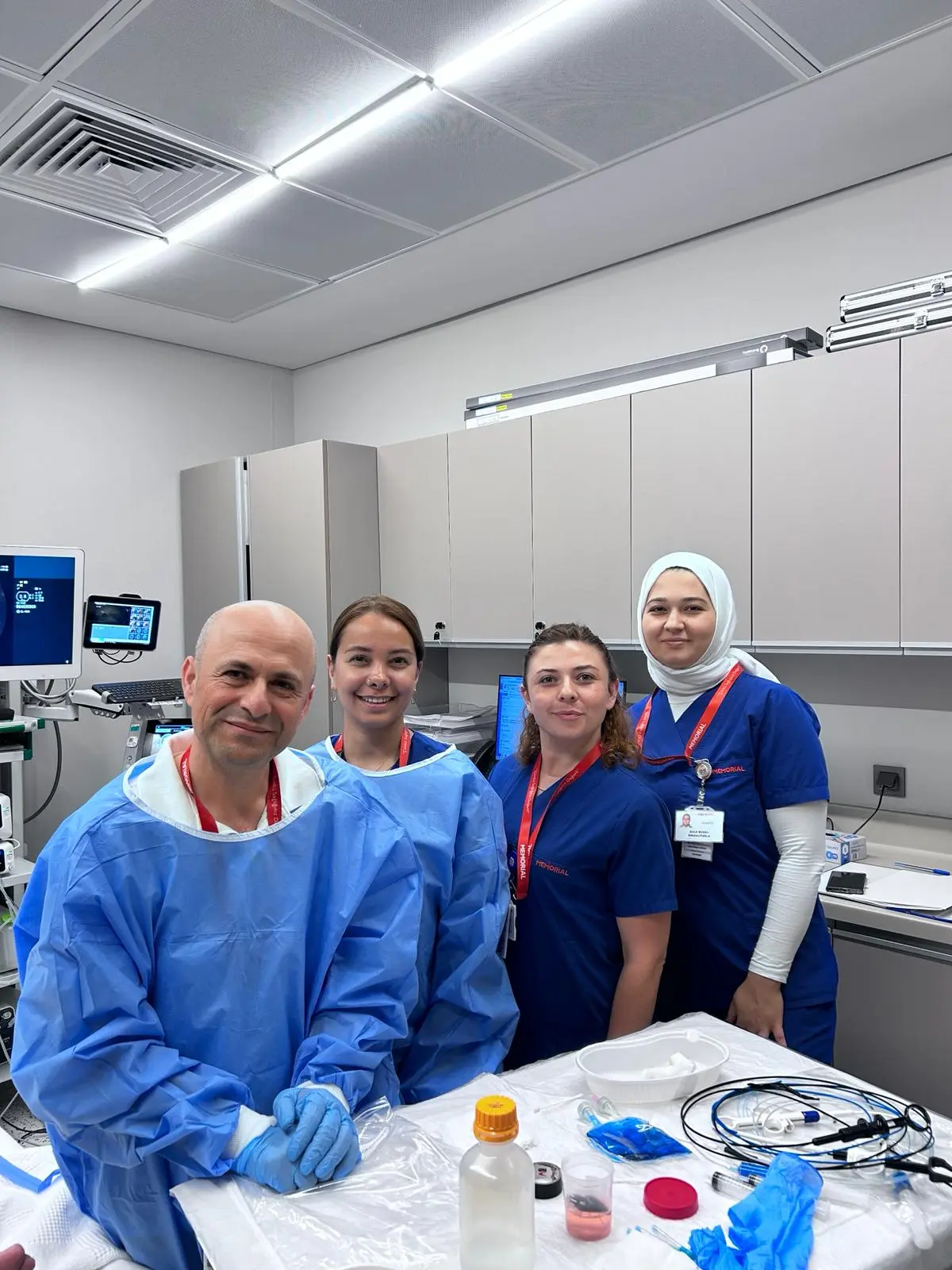
Press archive →
?

Frequently asked questions

Will it hurt?+

Comfort is planned according to the procedure and your health, often with sedation or anaesthesia support. Expected symptoms and pain relief are explained before discharge.

Can I go home the same day?+

Many procedures are day cases, but the extent of treatment, other illnesses or observation needs can require an overnight stay.

Should I stop my medicines?+

Never stop prescribed medicines on your own. Blood thinners and diabetes medicines require an individual written plan.

When will I receive results?+

Visual findings may be discussed immediately. Biopsy or resection results take longer and should be interpreted with the treating clinician.

i

Author: Doç. Dr. Süleyman Günay
Medical review status: Awaiting physician verification
Last medical review: 2026-09-13
Read our medical content and evidence policy →

R

Scientific References

Official guidelines, scientific articles and patient information sources used for this page. Source links open in a new tab.
  1. ASGE · 2024 · clinical guidelineAmerican Society for Gastrointestinal Endoscopy guideline on the role of endoscopy in the diagnosis and management of solid pancreatic masses: summary and recommendationsDOI: 10.1016/j.gie.2024.06.002PMID: 39387777
    Open source ↗
  2. ESGE · 2026 · quality guidelinePerformance measures for endoscopic ultrasound: an ESGE Quality Improvement Initiative – Update 2025DOI: 10.1055/a-2716-7763PMID: 41224207
    Open source ↗
  3. ASGE · 2024 · clinical guidelineAmerican Society for Gastrointestinal Endoscopy guideline on the role of therapeutic EUS in the management of biliary tract disorders: summary and recommendationsDOI: 10.1016/j.gie.2024.03.027PMID: 39078360
    Open source ↗
  4. ESGE · 2017 · clinical guidelineIndications, results, and clinical impact of EUS-guided sampling in gastroenterology: ESGE Clinical GuidelineDOI: 10.1055/s-0043-109021
    Open source ↗
  5. AGA GI Patient Center · Current · patient guidanceEndoscopic Ultrasound (EUS)
    Open source ↗
  6. ASGE · Current · guideline libraryEUS and EUS-guided procedures – guideline resources
    Open source ↗
  7. Medicine (Baltimore) · 2021 · peer reviewed original researchEvaluation of hydrogen peroxide-assisted endoscopic ultrasonography-guided necrosectomy in walled-off pancreatic necrosis: A single-center experienceDOI: 10.1097/MD.0000000000023175PMID: 33545925
    Open source ↗
  8. Türk Gastroenteroloji Derneği (TGD) · Current · national societyTürk Gastroenteroloji Derneği – Hasta ve Mesleki Bilgi Kaynakları
    Open source ↗
  9. European Society of Gastrointestinal Endoscopy (ESGE) · Current · guideline libraryClinical Guidelines and Position Statements
    Open source ↗
Request an Appointment WhatsApp World InstagramLinkedInGoogle Scholar